
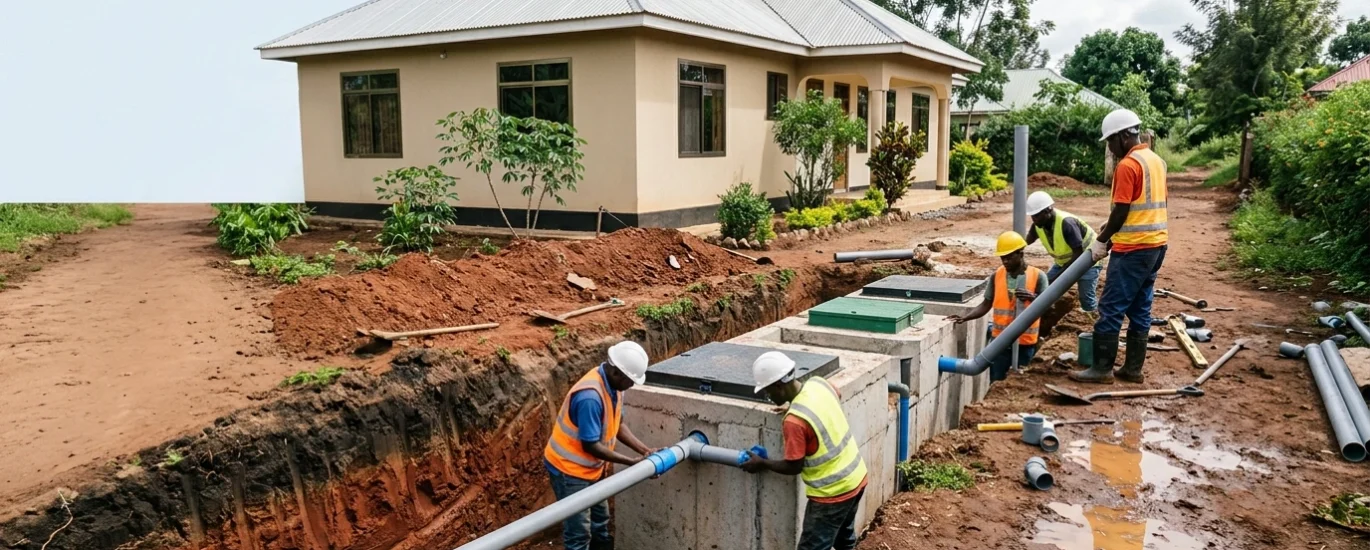
The cost of septic system installation in Tanzania depends on the system type, number of users, ground conditions, excavation requirements and wastewater-disposal arrangements. Biosept Enterprises Company Limited offers biodigester packages from TSh 2.5 million for 1–20 users to TSh 13.5 million for 1–400 users, including supply, delivery, materials, labour and installation.
For homeowners, property developers, hotels and commercial property owners, the important decision is not simply how much a tank costs. It is how much the complete wastewater solution will cost to install, operate and maintain.
How Much Does Septic Tank Installation Cost in Tanzania?
Septic tank installation costs depend on the construction scope and the type of wastewater system required. Biosept’s biodigester installation packages range from TSh 2.5 million to TSh 13.5 million, depending on the number of users the system is designed to serve.
A World Bank report on urban expansion in Tanzania estimated the cost of a conventional septic tank and soakaway pit at approximately TSh 3 million per unit in its development-cost analysis. This is a published benchmark, not a universal current installation price.
The distinction matters because a conventional septic tank and a biodigester are not necessarily the same system. Their design, treatment processes, disposal requirements and maintenance needs can differ.
When comparing quotations, establish whether the price covers only the tank or includes supply, transportation, excavation, construction, labour, pipework and the required wastewater-disposal arrangement.
How Much Does a Biodigester Cost in Tanzania?
Biosept biodigester packages cost between TSh 2.5 million and TSh 13.5 million, depending on the system’s user capacity. Every listed package includes supply, delivery and installation, with all materials and labour included.
Biosept biodigester installation prices
| Biodigester capacity | Package price |
|---|---|
| 1–20 users | TSh 2,500,000 |
| 1–66 users | TSh 5,500,000 |
| 1–100 users | TSh 7,500,000 |
| 1–200 users | TSh 10,500,000 |
| 1–400 users | TSh 13,500,000 |
These are Biosept’s stated package prices, not a claim that every installer in Tanzania charges the same rates.
The appropriate capacity depends on the expected number of users and the property’s wastewater requirements. A family home, hotel and commercial facility may have very different wastewater loads, so choosing a system based only on the lowest price can lead to an unsuitable installation.
The package covers supply, delivery, installation, materials and labour. Any additional site-specific drainage or wastewater-disposal requirements should be confirmed during the site assessment rather than assumed to be included.
What Is Included in the Cost of Installing a Septic System?
A complete wastewater installation may involve more than the tank itself. Depending on the system, the work can include excavation, pipework, the treatment unit, labour, construction materials and an appropriate arrangement for handling treated effluent.
The Tanzania Ministry of Water’s guidance on on-site sanitation systems explains that conventional septic systems commonly use a septic tank followed by a soakaway pit. It also discusses alternatives for sites with high groundwater levels or poorly permeable soils.
Before accepting a quotation, ask the installer to identify the work included and any exclusions. In particular, confirm how excavation will be handled, how wastewater will enter the system and how treated effluent will be managed.
A quotation that excludes necessary drainage or difficult-ground work may appear cheaper initially but can leave the property owner with additional expenses.
What Factors Affect Septic System Installation Cost in Tanzania?
The main cost factors include system capacity, soil conditions, groundwater level, excavation difficulty, materials, transportation and labour. Two properties requiring similar treatment capacity can have different installation costs because the ground and construction requirements are different.
The Tanzania Ministry of Water’s on-site sanitation guidance identifies soil permeability and groundwater conditions as important considerations when selecting sanitation technologies.
How Does Soil Type Affect Septic System Installation Cost?
Soil and underlying rock affect excavation, drainage and the suitability of the proposed wastewater-disposal system. Hard rock may require specialised machinery, while clay or poorly permeable soils can make conventional soakaway arrangements unsuitable without additional design measures.
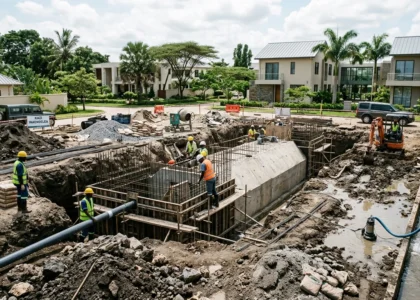
Biosept’s Masaki project illustrates this challenge. The site contained hard, semi-permeable coral rock that could only be excavated effectively using specialised equipment, including diggers and jackhammers.
Such conditions can increase equipment requirements, excavation time and labour costs. This is why a site inspection is important before committing to a final installation price.
How Does a High Water Table Affect Septic System Installation Cost?
A high water table can complicate excavation and affect the performance of conventional septic tank and soakaway systems. Additional drainage measures or a different sanitation design may be needed, depending on the site’s conditions.
The Tanzania Ministry of Water’s technical guidance warns that soakaway pits in high-water-table areas can overflow during rainy seasons. It recommends considering alternative or supplementary technologies, including constructed wetlands and subsurface drainage, where appropriate.
The correct response is not simply to choose a larger tank. The installer must assess groundwater, soil, available space and the safe management of treated wastewater before recommending a system.
How Long Does It Take to Install a Septic System?
Installation time depends on the system’s capacity, excavation conditions and the work required at the property. Based on Biosept’s project experience, a domestic biodigester designed for 1–20 users typically takes about three days to install, while larger projects can take approximately three to four weeks.
These are practical planning estimates rather than guaranteed completion times. Hard rock, a high water table, difficult site access and additional construction requirements can affect the schedule.
Property owners should also distinguish between the physical installation period and the overall project timeline. Site assessment, planning, delivery and any additional drainage work may need to be completed before installation can begin.
How Long Does a Domestic Biodigester Installation Take?
For a straightforward domestic site requiring a 1–20-user biodigester, Biosept’s typical biodigester installation period is approximately three days.
Larger installations may take three to four weeks, depending on the project scope and ground conditions. Commercial projects should be assessed individually because their construction requirements can differ substantially from those of a residential property.
How Do Septic Systems Work Step by Step?
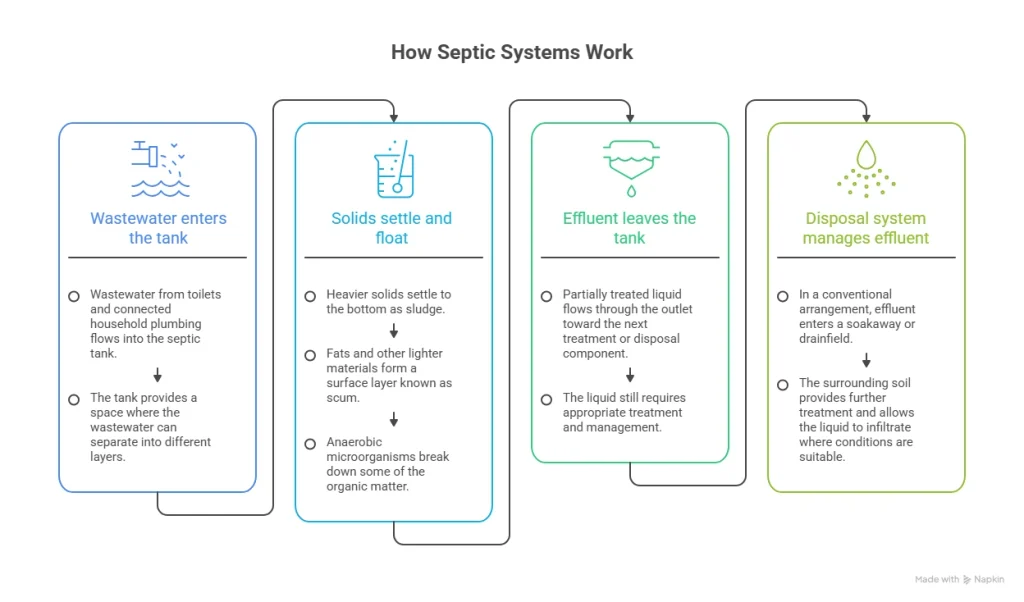
A conventional septic system receives wastewater in a tank, separates solids from liquid and sends the partially treated effluent to a soil-disposal area. The soil then provides additional treatment as the liquid disperses.
The US Environmental Protection Agency’s explanation of how septic systems work describes this sequence and the role of the tank, drainfield and surrounding soil.
Step 1: Wastewater enters the tank
Wastewater from toilets and connected household plumbing flows into the septic tank. The tank provides a space where the wastewater can separate into different layers.
Step 2: Solids settle and lighter materials float
Heavier solids settle to the bottom as sludge, while fats and other lighter materials form a surface layer known as scum. Anaerobic microorganisms break down some of the organic matter.
Step 3: Effluent leaves the tank
Partially treated liquid flows through the outlet toward the next treatment or disposal component. The liquid still requires appropriate treatment and management.
Step 4: The disposal system manages the effluent
In a conventional arrangement, effluent enters a soakaway or drainfield. The surrounding soil provides further treatment and allows the liquid to infiltrate where conditions are suitable.
A biodigester also uses biological treatment, but its design and effluent-management requirements may differ from those of a conventional septic tank. The correct system must be selected for the property’s conditions and wastewater load.
Can a Septic System Be Installed in the Rain?
Yes, installation can sometimes continue during rainy weather, but heavy rain can make excavation and construction more difficult. The decision should depend on site safety, groundwater levels, soil conditions and whether the installation can be completed correctly.
Biosept’s practical experience is that rainy-season installation is challenging but can be possible. Working during this period can also reveal a site’s high-water-table conditions, helping the installer understand the more demanding seasonal scenario and plan for year-round performance.
However, a wet-season assessment does not by itself guarantee that a system will withstand every seasonal condition. The design must still account for groundwater, soil permeability, drainage and safe effluent disposal.
The Tanzania Ministry of Water’s sanitation guidance specifically identifies rainy-season overflow as a risk for soakaway pits in high-water-table areas.
What Problems Can Heavy Rain Cause During Installation?
Heavy rain can saturate the soil, allow water to collect in excavations and make some ground unstable. It can also make it harder to determine whether a proposed soakaway will perform properly under normal operating conditions.
Rainwater should not be deliberately directed into a septic tank or biodigester. Excess water can disrupt the system’s operation, increase hydraulic loading and contribute to drainage problems.
The installer should assess the site and postpone particular activities when conditions make excavation unsafe or prevent proper construction.
How Should You Budget for a Septic System or Biodigester?
Start by identifying the number of users, the treatment system required and the site’s soil and groundwater conditions. Then compare quotations based on the complete scope of work, not simply the price of the tank.
Biosept’s biodigester packages provide a starting point for budgeting, with biodigester prices from TSh 2.5 million for 1–20 users to TSh 13.5 million for 1–400 users.
| Budget consideration | What to confirm |
|---|---|
| Capacity | Is the system sized for the expected number of users? |
| Supply and delivery | Are materials and transportation included? |
| Installation | Are labour and installation included? |
| Excavation | Is ordinary or specialised excavation required? |
| Soil and groundwater | Are there difficult-ground or wet-site conditions? |
| Effluent management | What drainage or disposal arrangement is required? |
| Maintenance | What routine care and eventual servicing will be needed? |
A site-specific assessment is the best way to identify potential additional work before construction starts. It also helps property owners compare different wastewater technologies on a consistent basis.
Is a Biodigester Better Than a Conventional Septic Tank?
Biosept recommends biodigesters because, in the company’s practical experience, they can offer savings in money, time and resources while accommodating a range of soil conditions. However, the best solution for a particular property depends on the design, site assessment, wastewater load and effluent-management requirements.
A conventional septic tank primarily separates solids from wastewater and provides partial treatment before discharging effluent to a suitable disposal system. It also accumulates sludge that requires periodic removal.
A biodigester uses biological processes to treat organic waste. Its maintenance requirements depend on the specific design, how heavily it is used and the way the system is operated.
The Tanzania Ministry of Water’s on-site sanitation guidance shows why the choice must account for groundwater and soil permeability rather than relying on one technology for every site.
For property owners, the most useful comparison includes the initial installation cost, construction time, maintenance requirements, available space and the safe management of treated effluent. A biodigester should not be assumed to eliminate every maintenance task or to suit every site without assessment.
What Should You Check Before Installing a Biodigester?
Before installation, confirm the required capacity, the scope of the quotation, the site conditions and the planned route for wastewater and treated effluent. These checks help reduce the risk of unexpected construction costs or an unsuitable system.
Ask the installer:
- How many users is the system designed to serve?
- Does the quoted price include supply, delivery, materials, labour and installation?
- What excavation equipment might the site require?
- How will high groundwater or poorly permeable soil affect the design?
- What wastewater-disposal or drainage arrangements are needed?
- What maintenance will the system require?
- What warranty and after-installation support are provided?
For a property with hard coral rock, clay soil or a high water table, make sure these conditions are discussed before the final quotation is agreed.
Biosept can assess the property and recommend a biodigester solution based on the project’s capacity and site requirements.
Frequently Asked Questions
How much does septic tank installation cost in Tanzania?
The cost depends on the tank or treatment system, excavation, labour and wastewater-disposal requirements. A World Bank development-cost estimate puts a conventional septic tank and soakaway at approximately TSh 3 million per unit, while Biosept’s biodigester packages range from TSh 2.5 million to TSh 13.5 million according to user capacity.
What is the cost to install a septic tank and leach field?
The total cost depends on the tank, excavation, pipework, labour and the type and size of the disposal system. A site assessment is necessary to establish whether a conventional soakaway, leach field or another solution is suitable.
How long does it take to install a septic system?
A straightforward domestic biodigester installation for 1–20 users typically takes Biosept about three days. Larger projects can take three to four weeks, depending on capacity, excavation and site conditions.
Can a septic system be installed in the rain?
Septic system Installation can sometimes proceed in wet weather, but heavy rain can complicate excavation and reveal high groundwater levels that affect system design. The site should be assessed to ensure that construction is safe and that the completed system can manage wastewater under seasonal conditions.